
The landscape of Islamic education is undergoing a significant transformation thanks to technology.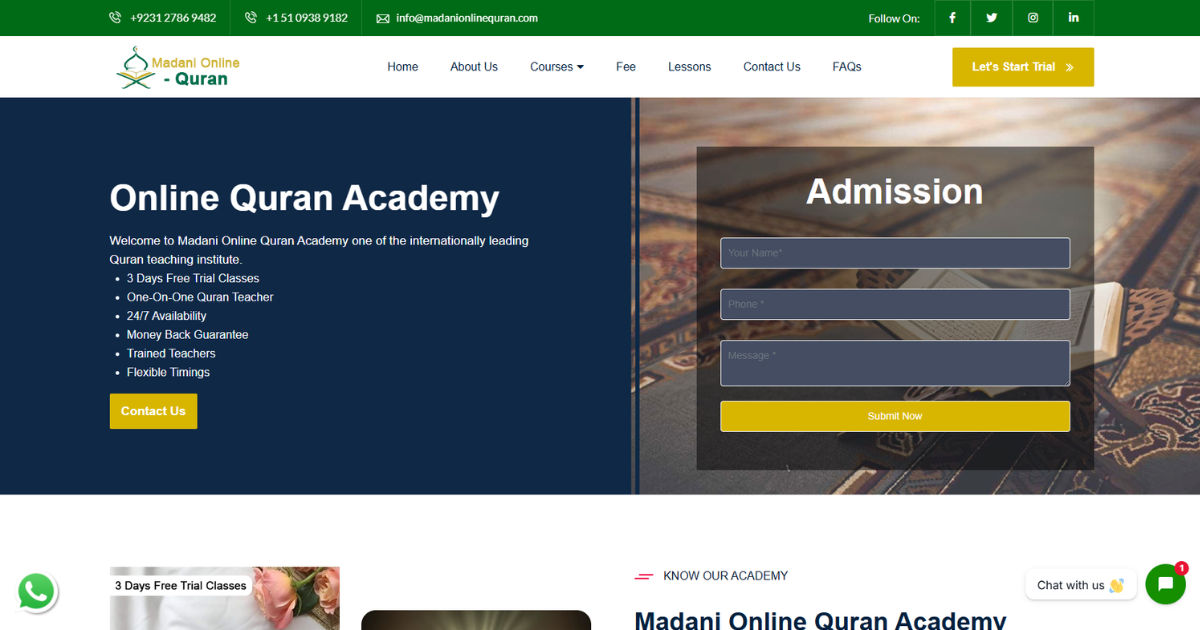
Traditional methods of learning the Quran, which often involved physically attending mosques or madrassas, are now being complemented and, in some cases, replaced by modern digital platforms.
One of the most notable innovations in this field is the Online Quran Academy, which has made learning more accessible, flexible, and personalized for students across the globe.
The rise of online Quran learning is not just about convenience—it is reshaping how Muslims of all ages interact with the sacred text. In this guide, we will explore how digital Quran learning is changing Islamic education, the benefits it offers, challenges it faces, and its potential for the future.
The Shift from Traditional to Digital Learning
Historically, Islamic education relied heavily on face-to-face teaching. Students would often spend years memorizing the Quran under the supervision of an experienced teacher. While this method ensured deep understanding and spiritual connection, it had limitations. Not every student had access to qualified teachers, and the learning pace was often dictated by class schedules and geographical constraints.
With the advent of digital technology, learning the Quran has become more accessible. Online Quran Academy platforms allow students to connect with certified teachers from anywhere in the world. This shift democratizes Islamic education, providing opportunities for children, adults, and even working professionals to study at their own pace.
Features of Online Quran Learning Platforms
Digital Quran learning is not simply about video lessons. Modern platforms like an Online Quran Academy offer an array of features that enhance learning experiences:
Personalized Learning
Each student can learn according to their pace and level. Beginners can focus on basic recitation, while advanced learners can engage in Tafseer (exegesis) and deeper Islamic studies. Personalized lesson plans ensure that every student receives attention tailored to their needs.
Interactive Lessons
Interactive tools such as digital whiteboards, quizzes, and recitation recording help students actively engage with the material. This hands-on approach reinforces learning, making it more effective than passive reading or listening.
Access to Expert Teachers
Digital platforms connect students with qualified Quran teachers from around the world. This global access ensures high-quality teaching and allows students to choose instructors who best match their learning style.
Flexible Scheduling
One of the most significant advantages of an Online Quran Academy is flexibility. Students can schedule classes according to their availability, making it easier to balance education with other responsibilities.
Progress Tracking
Digital platforms often include progress-tracking features that allow students and parents to monitor improvement over time. This ensures that learning goals are consistently met and areas requiring more attention are addressed.
Benefits of Digital Quran Learning
The rise of digital Quran learning offers numerous benefits for students, teachers, and communities.
Increased Accessibility
Students from remote areas can access qualified Quran teachers without relocating. This eliminates geographical barriers and ensures that quality Islamic education reaches everyone.
Enhanced Engagement
Digital tools make learning more interactive and engaging. Audio-visual aids, gamified learning modules, and instant feedback help maintain student interest, especially for younger learners.
Convenience and Flexibility
Unlike traditional madrassas, online Quran learning allows students to study from home. This is particularly beneficial for families with busy schedules, working adults, or those unable to travel to a physical location.
Cost-Effectiveness
Online learning often reduces costs associated with transportation, boarding, and physical resources. Many Online Quran Academy platforms offer competitive pricing, making quality education more affordable.
Support for Lifelong Learning
Digital platforms encourage lifelong learning. Adults who missed traditional schooling can now begin Quranic studies at any age. This helps nurture a deeper spiritual connection and continuous personal growth.
Challenges of Online Quran Learning
Despite its advantages, digital Quran learning is not without challenges. Understanding these challenges can help learners and educators develop effective solutions.
Lack of Physical Interaction
Some critics argue that online learning lacks the personal touch of traditional classrooms. Face-to-face guidance and immediate corrections can be more challenging to replicate in a digital environment.
Technical Limitations
Students need a reliable internet connection, appropriate devices, and familiarity with digital tools. In regions with limited technological infrastructure, these requirements can hinder access.
Maintaining Motivation
Self-discipline is crucial for online learning. Without the structured environment of a physical classroom, some students may struggle to stay motivated or adhere to consistent study schedules.
Ensuring Quality and Certification
Not all digital Quran platforms maintain high teaching standards. Parents and students must carefully select an Online Quran Academy that employs certified teachers and provides proper accreditation.
The Role of Technology in Enhancing Islamic Education
Technology has introduced innovative methods to enhance Quran learning beyond traditional recitation and memorization.
AI-Powered Learning Tools
Artificial Intelligence can analyze a student’s recitation, highlight errors in Tajweed (pronunciation rules), and offer corrective feedback. This personalized attention, often unavailable in crowded classrooms, significantly improves learning outcomes.
Multimedia Resources
Digital platforms provide access to a variety of multimedia resources, including Quranic animations, educational videos, and interactive Tafseer sessions. These resources make learning more engaging and help students better understand complex concepts.
Mobile Learning
With smartphones becoming ubiquitous, mobile applications allow students to learn anytime, anywhere. This mobility supports consistent practice, which is critical for memorization and fluency in recitation.
Virtual Communities
Digital platforms often include forums, chat groups, and online communities where students can interact, ask questions, and share experiences. This sense of community strengthens engagement and encourages collaborative learning.
Impact on Teachers and Education Professionals
The rise of online Quran learning is not only affecting students but also changing the role of teachers and educators.
Teacher Training and Development
Instructors must adapt to new technologies and online teaching methods. This includes mastering virtual classrooms, digital communication, and innovative teaching tools.
Expanding Reach
Teachers can now reach a global audience, expanding their influence and helping students from diverse cultural backgrounds.
Adapting Teaching Methods
Educators are increasingly employing interactive and technology-based teaching strategies, making lessons more engaging and tailored to individual student needs.
Case Studies: Success of Online Quran Academies
Several Online Quran Academy platforms have achieved remarkable success in transforming Islamic education.
- Students in remote regions have gained access to expert teachers who would otherwise be unavailable.
- Young learners have improved Tajweed and memorization skills through AI-based feedback tools.
- Adults have resumed Quranic studies, showing that flexible digital learning supports lifelong education.
These examples demonstrate that digital Quran learning can complement traditional education while offering unique benefits that were previously unattainable.
Future of Digital Quran Learning
The future of Islamic education is closely tied to technological advancement. Here are some trends and possibilities:
Integration of Virtual Reality
Virtual Reality (VR) could simulate immersive learning environments, allowing students to engage with Quranic studies in innovative ways. Imagine attending a virtual Madrasah from the comfort of your home.
Advanced AI Tutors
AI tutors may soon provide real-time correction, personalized lesson plans, and interactive Quranic exercises, making self-paced learning even more effective.
Global Collaboration
Digital platforms can foster international collaboration among students, scholars, and educators, promoting cross-cultural understanding and shared knowledge of Islamic teachings.
Hybrid Learning Models
Combining online and offline methods will likely become more common, providing the best of both worlds: personal interaction and technological flexibility.
Tips for Choosing the Right Online Quran Academy
Not all digital Quran learning platforms are equal. Students and parents should consider the following factors:
- Certified and experienced teachers.
- Interactive lessons with multimedia support.
- Flexible scheduling to accommodate personal needs.
- Progress tracking and feedback mechanisms.
- Positive reviews and success stories from past students.
Choosing the right platform ensures a high-quality, effective learning experience that nurtures both knowledge and spiritual growth.
Conclusion
Digital Quran learning is revolutionizing Islamic education. Platforms like an Online Quran Academy are making the Quran accessible to students worldwide, providing flexibility, personalized instruction, and innovative learning tools. While challenges like maintaining motivation and ensuring teaching quality exist, the benefits far outweigh them.
The integration of technology with traditional Islamic education is not meant to replace conventional methods but to enhance them. With AI, VR, and mobile learning tools, students can engage deeply with the Quran, understand its teachings more profoundly, and develop a lifelong connection with Islamic knowledge.
The future of Islamic education lies in this harmonious blend of tradition and innovation, where students can experience spiritual growth while embracing the conveniences and advancements of the digital era.
Digital Quran learning is more than a trend—it is a transformative movement that promises to make Islamic education inclusive, engaging, and effective for generations to come.