
Yes, there are several free options available if you are looking for a Bitly alternative. URL shorteners have become useful for businesses, marketers, social media users, content creators, and everyday internet users who want to turn long web addresses into shorter and cleaner links.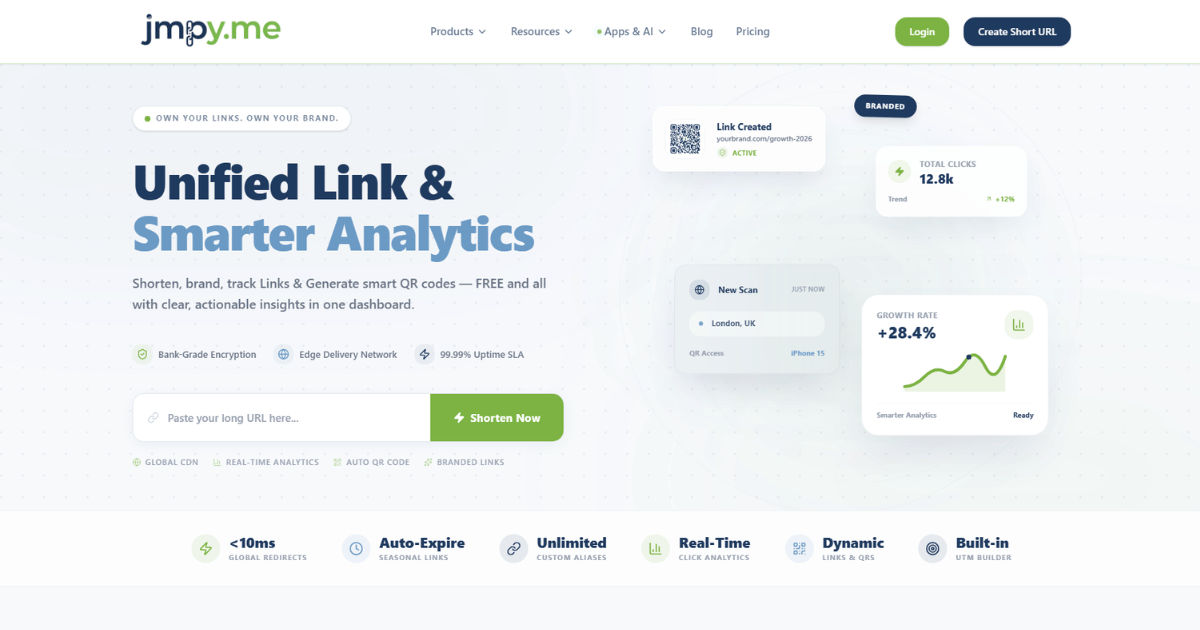
Bitly is one of the best-known URL shortening services, but it is not the only option. Depending on what you need, you can find free tools that offer simple link shortening, custom URLs, QR codes, click tracking, branded links, and other useful features.
The right Bitly alternative depends on your specific goals. Someone who only wants to shorten a long link may need a very simple service. A marketer may need analytics and campaign tracking. A business may want branded links that match its company name. A developer may prefer an open-source solution that can be hosted on their own server.
This guide explains the best free options, what features to look for, how URL shorteners work, and which type of service may be right for you.
What Is a URL Shortener?
A URL shortener is a service that converts a long web address into a much shorter link.
For example, imagine you have a long URL that contains multiple parameters and tracking information. Instead of sharing the entire address, you can use a short link that redirects visitors to the original destination.
The process is simple.
You enter your original URL into a URL shortening service. The service creates a shorter address. When someone clicks the short link, they are automatically redirected to the original webpage.
This makes links easier to share.
Short links are especially useful on social media platforms, in printed marketing materials, emails, presentations, advertisements, and text messages.
They can also make a link look cleaner and easier to remember.
Why Look for a Bitly Alternative?
Bitly is popular because it combines URL shortening with features such as link management and analytics. However, different users have different needs.
Some people simply want to shorten a URL without paying for advanced features.
Others may want more generous free limits.
Some users prefer a service that provides QR codes. Others want custom short URLs or branded domains.
Privacy can also be a reason to look for another option. Depending on the service, users may have different concerns about data collection, analytics, account requirements, and link management.
Another reason is flexibility.
If you are a developer or technically experienced user, you may prefer an open-source URL shortener that you can host yourself rather than depending entirely on a third-party platform.
For these reasons, searching for a Bitly alternative can make sense even if Bitly itself works well for many users.
What Makes a Good Bitly Alternative?
Before choosing a URL shortener, it is important to understand the features that matter.
Not every free service provides the same capabilities.
A basic URL shortener may only create a shorter link. A more advanced platform may include analytics, custom URLs, QR codes, branded domains, API access, and link management.
Your choice should depend on how you plan to use the links.
Free URL Shortening
The most important feature is simple URL shortening.
A good free service should allow you to enter a long URL and quickly generate a shorter version.
For casual users, this may be all that is necessary.
If you are sharing a link with friends, posting it on social media, or including it in a message, advanced marketing features may not be important.
In this situation, a simple free service can be an excellent Bitly alternative.
Custom Short Links
Some services allow users to customize the ending of a shortened URL.
For example, instead of receiving a random combination of characters, you may be able to create a short link that contains a meaningful word.
This can make links easier to recognize.
A custom short link can also help users understand where the link may lead.
For businesses, this feature can improve branding and make marketing campaigns easier to organize.
However, custom links may require an account or may only be available on paid plans.
Click Analytics
Analytics are important for anyone using short links for marketing.
A URL shortener with analytics can show information about link activity.
Depending on the service, you may be able to see the number of clicks, approximate geographic information, referral sources, devices, or other data.
This information can help you understand how people interact with your links.
For example, a business might create separate links for Facebook, Instagram, email, and printed advertisements. By comparing performance, the business can determine which channels generate the most traffic.
If analytics are important to you, make sure your chosen Bitly alternative provides the level of tracking you actually need.
QR Code Generation
QR codes are now common in restaurants, stores, events, packaging, advertisements, and printed marketing.
Some URL shortening services automatically create QR codes for shortened links.
This can be convenient because you do not need to use a separate QR code generator.
A business could create a short link for a product page and then generate a QR code connected to that link. Customers can scan the code with their phones and visit the destination.
This is especially useful for offline marketing.
Branded Links
Branded links use a custom domain instead of a generic URL shortening domain.
For example, a company may want its short links to use its own brand name.
This can improve recognition and create a more professional appearance.
Branded links are generally more useful for businesses than casual users.
They can also help establish consistency across marketing campaigns.
However, branded domains are often premium features, so a completely free Bitly alternative may not provide them.
API Access
Developers may need to create and manage short links automatically.
An API allows software applications to communicate with a URL shortening service.
For example, a marketing platform could automatically create a short link whenever a new campaign is published.
API access is not necessary for most casual users.
However, it can be an important consideration for developers and companies building automated workflows.
Open-Source URL Shorteners
Open-source URL shorteners are another category worth considering.
Instead of using a hosted platform, you can install an open-source application on your own server.
This gives you greater control over your links and data.
One well-known example is YOURLS, which stands for Your Own URL Shortener.
YOURLS is designed for people who want to operate their own URL shortening system.
It requires more technical knowledge than a typical online URL shortener because you need hosting and installation.
However, it can be a strong choice for developers, organizations, and technically experienced users who want more control.
An open-source solution can be an excellent Bitly alternative when ownership and customization are more important than convenience.
Best Free Bitly Alternatives
There is no single best option for everyone.
The best service depends on your requirements, technical knowledge, and expected link volume.
Below are several popular categories and services worth considering.
TinyURL
TinyURL is one of the longest-established URL shortening services.
Its main advantage is simplicity.
Users can shorten a long URL without needing to understand complicated settings.
TinyURL has traditionally been popular with people who want a quick solution.
It can be useful for casual link sharing, social media posts, emails, and other everyday situations.
For users who do not need advanced marketing analytics, TinyURL can be a practical Bitly alternative.
The exact features available through free and paid plans may change over time, so users should review the current service details before choosing it for professional campaigns.
Short.io
Short.io focuses more heavily on branded links and link management.
It can be useful for businesses and marketers that want more control over their short URLs.
The platform supports features designed for managing links at a larger scale.
For organizations that want to connect short links with their own domains, Short.io may be worth exploring.
Its suitability as a free Bitly alternative depends on the number of links and features you require.
Users should check the current free plan limits before committing to it for a large campaign.
Rebrandly
Rebrandly is another service that focuses strongly on branded links.
Branded short links can be valuable for businesses that want their marketing URLs to reinforce their identity.
For example, a company may use a branded domain to create links that are easier for customers to recognize.
Rebrandly may be particularly attractive to marketing teams and businesses.
However, advanced branding and analytics features may have limitations on free plans.
This means it is important to compare the free plan with your actual requirements.
is.gd
is.gd is a simple URL shortening service that focuses on the core purpose of shortening links.
It can be appealing to users who want a straightforward tool without a complicated marketing platform.
If your only requirement is to turn a long URL into something shorter, a lightweight service such as is.gd may be enough.
This type of service can be a good Bitly alternative for simple, everyday use.
The trade-off is that you may not receive the advanced analytics and campaign management features available from larger platforms.
T.LY
T.LY provides URL shortening and related link management capabilities.
It can be considered by users who want a modern alternative for creating shorter URLs.
Depending on the current plan structure, it may offer features such as analytics and QR code generation.
As with any service, it is important to check the current free plan limitations.
A tool may technically be free while limiting the number of links, clicks, or advanced features available to free users.
Dub
Dub is a modern link management platform that has gained attention among developers, startups, and technical users.
It focuses on short links, analytics, and developer-friendly functionality.
Its approach may appeal to users who want more than basic URL shortening.
Depending on your needs and the current pricing structure, Dub can be worth considering as a Bitly alternative.
It is especially interesting for people who care about modern link management workflows and integrations.
YOURLS
YOURLS is different from most hosted URL shortening services.
It is an open-source application that allows you to run your own URL shortener.
The major advantage is control.
You can manage your own system and customize it according to your needs.
The disadvantage is that it requires technical setup.
You will generally need a domain, hosting, and the ability to install and maintain the software.
For someone who wants a simple solution, this may be too complicated.
For a developer or organization that wants ownership and flexibility, YOURLS can be one of the strongest types of Bitly alternative available.
Firebase Dynamic Links and Similar Services
It is important to distinguish traditional URL shorteners from deep-linking platforms.
Some services are designed to send users to specific content depending on the device or application.
These tools may be useful for mobile applications but are not always direct replacements for a standard URL shortener.
Before choosing a platform, consider what you actually need.
If you simply want shorter URLs, a traditional URL shortening service is usually easier.
If you need sophisticated mobile app routing, you may need a specialized deep-linking solution instead.
Which Free Bitly Alternative Is Best for You?
The right choice depends on your situation.
If you want a simple link for occasional use, choose a basic URL shortening service.
If you need branded links, look for a platform that supports custom domains.
If you need marketing analytics, choose a service with detailed click tracking.
If you are a developer, consider API support.
If you want complete control, consider an open-source self-hosted solution.
There is no reason to choose the most complicated platform if your needs are simple.
A common mistake is paying for features that you never use.
At the same time, businesses should not choose a basic tool if they need reliable analytics and campaign management.
Free vs Paid URL Shorteners
Free URL shorteners are often enough for casual users.
You can shorten links and share them without paying a monthly subscription.
However, free plans may have limitations.
These can include restrictions on the number of links you can create, the number of clicks you can track, analytics history, custom domains, or team features.
Paid plans generally provide more advanced functionality.
They may also provide better support and additional controls for organizations.
The important question is not whether a paid plan is better.
The question is whether you need the features it provides.
For personal use, a free Bitly alternative may be completely sufficient.
For a business running multiple marketing campaigns, investing in a paid platform may be more practical.
Are Free URL Shorteners Safe?
Most reputable URL shortening services are safe to use, but users should still be careful.
The main issue is that a shortened URL hides the original destination.
When you see a long URL, you can often understand where it leads.
With a short link, the destination is not immediately visible.
This means short links can sometimes be abused to hide malicious websites, phishing pages, or unwanted content.
For this reason, users should avoid clicking suspicious short links from unknown sources.
Businesses should also use reputable URL shortening providers.
If you operate your own shortener, you have greater control but also greater responsibility.
You need to maintain security, monitor abuse, and keep your software updated.
Do Short Links Expire?
Whether a shortened link expires depends on the service.
Some providers keep links active indefinitely as long as the service continues operating.
Others may impose limits based on account status or usage.
A link can also stop working if the service shuts down.
This is an important consideration for long-term projects.
If you are creating links for printed brochures, packaging, business cards, or permanent signage, you should choose a reliable provider.
You do not want a QR code printed on thousands of products to stop working because the URL shortening service disappears.
What Happens If a URL Shortener Shuts Down?
This is one of the biggest risks associated with third-party URL shortening services.
When you use a URL shortener, you are relying on another company to maintain the redirect.
If the company closes its service, your short links may stop working.
This is sometimes called link rot.
The risk is relatively low with established providers, but it cannot be completely ignored.
For important business campaigns, it may be better to use a custom domain or a self-hosted solution.
This gives you more control over the long-term availability of your links.
Should You Use a Free URL Shortener for Business?
Yes, but you should choose carefully.
A free service may be perfectly suitable for a small business with limited requirements.
For example, a business might use short links in social media posts or occasional promotional materials.
However, businesses should think about long-term reliability.
If a short link is printed on packaging or advertising material, changing it later may be difficult.
A branded short domain can provide greater control and professionalism.
Businesses should also consider analytics.
Understanding how many people click a link and where those clicks come from can help improve marketing decisions.
URL Shorteners and SEO
Many people wonder whether URL shortening directly improves search engine rankings.
In general, shortening a URL is not a direct SEO strategy.
A short URL can be easier to share and may look cleaner, but search engine optimization depends on many other factors.
These include useful content, website quality, technical performance, internal linking, backlinks, user experience, and search intent.
A shortened link is mainly a convenience and tracking tool.
It should not be viewed as a replacement for proper SEO.
If you are creating website pages for search engines, it is usually better to maintain clear and descriptive URLs on your own website.
Shortened links can then be used for campaigns and sharing when appropriate.
URL Shorteners for Social Media
Social media platforms have made URL shortening less important in some situations.
Many platforms automatically shorten or display links differently.
However, short links can still be useful.
They are easier to include in posts where character limits matter.
They can also make promotional messages look cleaner.
For social media campaigns, analytics can be particularly valuable.
A marketer can create separate short links for different campaigns and compare the results.
This can help identify which platform or campaign produces the most engagement.
URL Shorteners for Email Marketing
Short links can also be useful in email marketing.
A long URL filled with tracking parameters can look confusing.
A shorter link may appear cleaner.
However, email marketers should avoid overusing unfamiliar short links.
Some recipients may be cautious about clicking links when they cannot see the destination.
A branded short link can help solve this problem by making the destination more recognizable.
For professional campaigns, combining short links with clear call-to-action text can improve the overall experience.
URL Shorteners for QR Codes
QR codes and URL shorteners work well together.
A QR code can point to a short URL instead of a long web address.
This makes the QR code easier to manage in some situations.
One major advantage is flexibility.
If your short URL redirects to a destination that changes later, you may be able to update the destination without changing the printed QR code.
This can be extremely useful for marketing materials.
For example, a restaurant could print one QR code on a menu and change the destination URL whenever the online menu is updated.
The QR code itself does not need to be reprinted.
How to Choose the Right Bitly Alternative
Start by identifying your actual needs.
Ask yourself how many links you need to create.
Think about whether you need analytics.
Consider whether you need custom URLs.
Decide whether branded domains are important.
Check whether you need QR codes.
If you are a developer, determine whether API access is required.
Also consider how important long-term reliability is.
A casual link shared in a message does not need the same level of planning as a URL printed on product packaging.
Check Free Plan Limitations
Never assume that a service advertised as free provides unlimited access.
Read the current plan details carefully.
Look for limits on link creation, clicks, analytics, custom domains, and users.
Some services offer a free plan that is ideal for testing but insufficient for professional use.
Understanding the limits in advance can prevent unpleasant surprises.
Consider Privacy
Privacy is another factor to consider.
Different URL shortening platforms may collect different types of information.
Analytics can involve data about clicks, devices, geographic regions, and referral sources.
Before choosing a service for sensitive or high-traffic campaigns, review its privacy policies and data practices.
Organizations with strict privacy requirements may prefer a self-hosted solution.
Think About Reliability
A short link is only useful if it continues to work.
Choose a provider with a strong reputation and a history of maintaining its service.
If you are using short links for important business purposes, consider whether you can move your links elsewhere if necessary.
A custom domain can provide additional flexibility.
Self-hosting can provide even greater control, but it requires technical maintenance.
Consider Ease of Use
A feature-rich platform is not automatically the best choice.
If the interface is complicated, it may slow down your workflow.
For casual users, simplicity is often more valuable than advanced functionality.
For marketing teams, more advanced features may be worth the additional complexity.
Choose a tool that matches your technical ability and daily workflow.
Is a Free Bitly Alternative Really Worth Using?
For many people, yes.
If your main goal is to shorten URLs, there are plenty of free options.
You do not necessarily need to pay for a URL shortening service simply to create a shorter link.
The decision becomes more complicated when you need advanced analytics, branded domains, team collaboration, automation, or large-scale campaign management.
In those cases, a paid service may offer better value.
The best approach is to start with your requirements rather than the brand name.
Instead of asking which platform is the most popular, ask which service solves your specific problem.
Conclusion
There is no shortage of free URL shortening services, and choosing a Bitly alternative can be a smart decision when you want a simpler, more affordable, or more flexible way to manage links.
- For casual users, a basic URL shortener may provide everything necessary.
- For marketers, analytics and campaign tracking are more important.
- For businesses, branded links and reliability can make a major difference.
- For developers, API access and integrations may be essential.
For technically experienced users, an open-source self-hosted solution can provide greater control over data and link management.
Services such as TinyURL, Short.io, Rebrandly, is.gd, T.LY, Dub, and YOURLS each represent different approaches to URL shortening. Their features, free limits, and pricing can change, so it is always wise to review the current terms before selecting one for an important project.
The most suitable Bitly alternative is ultimately the one that matches your actual needs.
- If you only need to shorten a link occasionally, choose simplicity.
- If you are running marketing campaigns, prioritize analytics.
- If you are building a recognizable brand, consider branded links.
- If you need long-term control, explore custom domains or self-hosted options.
The key is to avoid choosing a platform based only on how many features it offers. A complicated tool can create unnecessary work if you only need basic URL shortening. On the other hand, selecting a basic service for a serious marketing operation can leave you without the analytics and control you need.
Before making your final choice, consider the number of links you expect to create, whether you need click tracking, how important branding is, and how long your links need to remain active. Also think about whether you are comfortable depending on a third-party service or would prefer to manage the system yourself.
Ultimately, free URL shorteners have made it easy for almost anyone to create clean, shareable links. Whether you are a student sharing a resource, a creator promoting content, a business managing campaigns, or a developer building an automated workflow, there is likely a solution that fits your needs.
A good Bitly alternative does not have to be the service with the longest feature list. It should be reliable, easy to use, appropriate for your goals, and capable of handling your expected level of usage. By comparing these factors carefully, you can find a free URL shortening solution that makes sharing and managing links much easier.